I build backend services at TÜBİTAK BİLGEM for Türkiye’s national public financial
management system, which has more than 2 million users. Java and Spring services that
talk over Kafka, PostgreSQL underneath, React on top. Most of the interesting problems
are about keeping state correct when several services touch the same record.
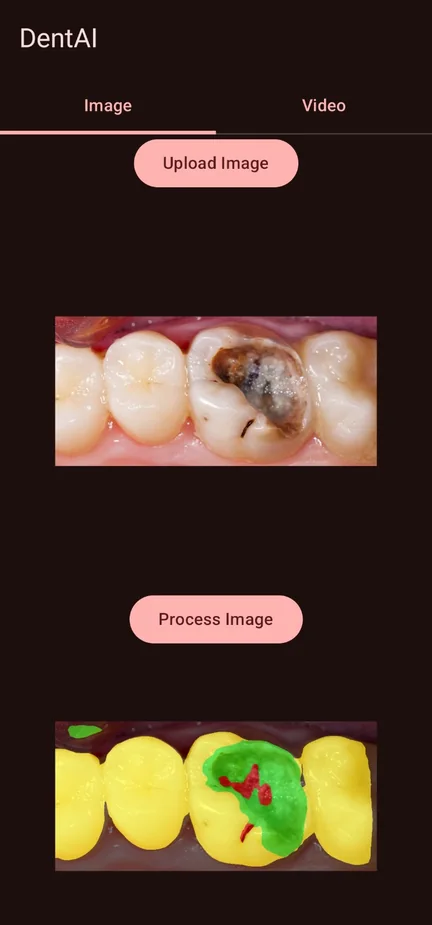
I also do applied computer vision. My graduation project became a first-author IEEE
paper on dental segmentation that runs live on an Android phone.
Two services, a Kafka topic between them, and a record that can change while an
approval is in flight. I designed the flow and wrote the guide other developers
follow to add new approval steps.
ScreenRequesting serviceOwning service
Opens the claim v1
Edited and resubmitted v4
approve, v1
command, expects v1
v1 ≠ v4 rejected
Travel expense claims live in two services. Accounting officers edit a claim in
the service that owns it. Supervisors approve it from a second service, which
sends the approval over Kafka.
Checking that the claim is still awaiting approval isn’t enough. A supervisor can
open a claim for ₺5,000; meanwhile the officer pulls it back, changes it to
₺50,000 and resubmits it. When the supervisor clicks approve on the old screen,
the claim is awaiting approval again. Same status, different content: the ABA
problem.
I designed the flow around two rules: the owning service is the only one that
decides, and every action carries the version the user was looking at.
The record’s version goes from the supervisor’s screen through the controller
and mapping layer into the Kafka command. The owning service compares it with
the current @Version before changing anything, and rejects a
mismatch.
The requesting service may prepare documents or an approval date, but it doesn’t
write them as final until the owner answers. Success and failure are separate
result messages, and a failure can’t carry changes to apply.
On failure, the owner deletes the documents the action generated, because a
database rollback doesn’t remove them.
Edits inside the owning service stay synchronous and use the same version check.
Only actions that cross the service boundary go through Kafka.
Each service ignores events it published itself on the shared topic, and a
result for a record deleted in the meantime is logged and dropped instead of
failing the consumer on every retry.
Supervisor’s screenRequesting serviceOwning service
Supervisor’s screen: Opens the claimv1 · ₺5,000
Owning service: Officer edits and resubmitsv4 · ₺50,000
Screen to requesting service: approve,
v1
Requesting service to owning service: command,
expects v1 Kafka
Owning service: v1 ≠ v4nothing applied
Owning service to requesting service: result:
failed Kafka
Requesting service to screen: claim has
changed
What happens to the approval from the old screen.
What it costs
Supervisors get the outcome asynchronously, so the UI confirms the action was
received and reports the result later. When an officer and a supervisor act at the
same moment, the officer’s synchronous write usually wins; the supervisor gets a
“claim has changed” message, never a corrupted claim.
I wrote the design up with the alternatives we rejected, plus an implementation
guide that other developers use to add new approval steps.
Built for my team, now used by several others. What each one changed:
Release extension21% → 1%
of a developer’s week spent on releases
Backport skill33% → 8%
of a fix’s time spent on backports
Review agent
N+1 queries caught before merge
Data masking
External LLMs usable on sensitive data
I built these for my own team first. Several other teams have since adopted them,
and I wrote the setup and usage guides for each.
Share of time, before and after
Releasesof a developer’s weekbefore 21%after ~1%
Backportsof a fix’s timebefore 33%after ~8%
Release extension: from a fifth of the week to almost nothing
Releases used to take at least 21% of a developer’s week on average. Now they take
about 1%. A release means tagging issues, cutting branches in the right order,
calculating versions for shared libraries and the applications that consume them,
writing release notes and starting builds, across several repositories at once.
The browser extension works out what a release needs and does all of it, for one
repository or many. It used to apply database changelogs and sync deployments too;
I took that out so a developer stays in control of production changes.
Backport skill: from a third of a fix’s time to 8%
Getting a fix onto every supported release line means branches, pull requests,
cherry-picks, matching library and application versions, and release notes for
each line. That used to eat about a third of the time spent on a fix. An agent
skill now plans it and opens the pull requests, and the share is down to about 8%.
Review agent: N+1 queries stopped slipping through
Our human reviews kept missing problems like N+1 queries. The review command and
subagent check a pull request, a set of branches or local changes in five to ten
minutes, and that class of issue now gets caught before merge.
Data masking: external LLMs became usable at all
Our logs and database rows contain personal data, so nobody could paste them into
an external AI tool. A macOS menu-bar app masks the sensitive fields on the
clipboard first. What leaves the machine is anonymized, and the team can use
external LLMs for debugging.
An expenditure’s detail view loaded several independent document collections in a
single query. Joining collections that don’t depend on each other returns one row
for every combination, so the result grows with the product of their sizes, not
the sum. Some expenditures have hundreds of related documents.
Three collection joins in one query20 × 30 × 10 = 6,000 rows
One targeted query per collection20 + 30 + 10 = 60 rows
I split the fetch into one query per collection and assembled the object graph in
a helper, with a separate path for callers that also need nested documents. The
persistence context maps every result back onto the same entities, so callers
still get one complete graph.
In batch payment validation I fixed the opposite problem: one query per payment
order inside a loop. A fetch specification loads them with their parent, and a
local check skips the remote validation call when there is nothing to validate.
In a paginated list, putting the fetch on the pageable query broke paging, and
an inner join hid records without an optional relation. Filtering and paging now
stay in the base query, relations load separately, and the optional join is a
left join.
Repository tests flush and clear the persistence context before asserting with
Hibernate.isInitialized. Otherwise entities left over from the test
setup look loaded and a missing fetch passes.
A callback from another service occasionally never arrived, which left an
employee’s record waiting indefinitely. While the underlying cause was being
investigated, I added a recovery job.
It runs on a single instance and can be switched off by a parameter.
It uses its own Kafka consumer outside the main group, without auto-commit, so
the main consumer’s offsets never move.
It assigns partitions directly and seeks by timestamp to scan a bounded window,
from two hours to thirty minutes before each run, so it never races fresh
messages.
Each event goes through the existing linking logic, which does nothing when the
record is already linked and never overwrites a different link.
It contains the problem; it isn’t the fix for the root cause, and isn’t meant to
be.
Some services logged Kafka poll timeouts, lost group membership and failed offset
commits. It looked like a messaging problem. Reading the logs in order showed
database read timeouts during updates first: the consumer was blocked on the
database long enough to be removed from its group, and the Kafka errors followed.
I worked through the remaining hypotheses with infrastructure and network
colleagues: row locks, dropped connections, a mismatched build, oversized updates.
Two things I had to keep straight: missing rows during a long first attempt don’t
prove a message was lost, and a read replica can’t tell you what happened on the
primary. I also reverted a speculative entity change so the network team could
reproduce the original behavior cleanly.
A set of historical relationship events between two services had apparently never
been processed. Replaying all of them would have been easy and wrong: since then,
some records had been relinked, cancelled or paid, and an old event could undo a
valid current state.
I worked out the side effects of each event type and wrote a read-only SQL
classification over message content, consume times, current relations,
cancellations and payment history, including possible message-ID collisions. Each
of the 33 events got a verdict someone else could check before anything was
republished.
Compressing attachments in the browser worked locally and hung on every deployed
environment. I compared the conversion code, browser profiles, library versions,
callback order and memory copies before finding the actual cause.
A script the compression library loads at runtime was served from the wrong path
in the Nginx configuration. The local dev server served it correctly, which hid
the problem. The fix was one line in each of three environments.
A shared library acknowledges a Kafka message once the listener method returns.
With nested transaction interception, “returned” can come before the outer
transaction physically commits, so a message can be acknowledged while its data is
still at risk.
I traced the Spring proxy and advice order and wrote reproduction tests for the
rules the library has to follow: acknowledge only after the physical commit, never
when the commit fails, and roll back before a negative acknowledgment.
A name search goes through a shared library and an outbound gateway before
reaching an external service, and Turkish characters broke along the way. There
were two separate problems: the query string wasn’t explicitly encoded as UTF-8,
and the gateway built its JSON body as a string instead of serializing a typed
request.
I fixed both and changed the contract tests to use Turkish characters. ASCII
fixtures pass either way, which is how the bug got through.
A lookup by petition number checked that the user had the right role, but not that
the record belonged to the user’s own public administration. In a system shared by
many institutions, that difference matters.
I added a record-level check that loads the record’s administration and compares
it with the user’s, and routed the alternate lookup paths through the same check.
Separately, I narrowed which roles can see preliminary control opinions before a
document is formally sent.
Payment types were hard-coded as Java enums and JavaScript constants, so every
regulatory change meant a deployment across several repositories.
I moved them into a table, migrated more than 150 existing records from string
values to foreign keys, exposed the types through an endpoint, injected the lookup
into the mapping layer and replaced the client’s static enum with a cached
context. New payment types have since been added without a deployment.
A follow-up fixed lowercase codes arriving from upstream integrations with a
Turkish-locale uppercase conversion, since a lowercase i doesn’t
uppercase to I in Turkish.
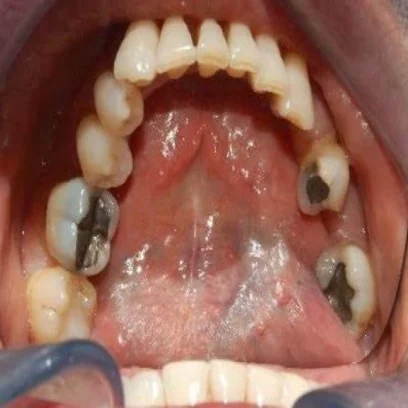
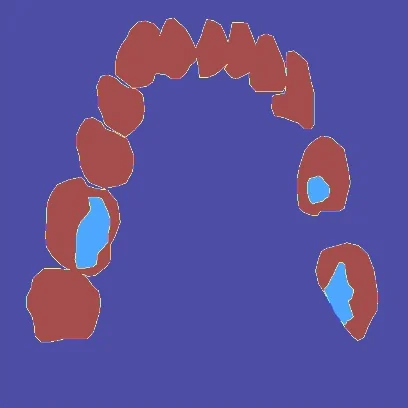
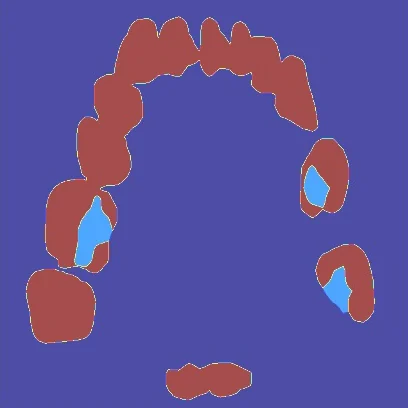
A graduation project at Gebze Technical University, supported by HAVELSAN’s AI JET
BİGG program. I started with one model for everything. The data made that a bad idea:
clinical gingiva photos are standardized, consumer photos of teeth are not, and the
two uses need different trade-offs. So there are two models: a gingiva model for
clinical analysis, and a DeepLabV3-MobileNetV3 that runs on the phone.
Mobile model
Gingiva model
Photo
Ground truthPrediction
Mean pixel accuracy
95.79%
Weighted IoU
90.10%
Dataset
2,495 images
Mobile model on its test split: teeth, caries, cavities and cracks in phone-quality
photos.
The gingiva model against the published result
Same clinical dataset and the same MobileNet backbone as the earlier study1, with broader augmentation and class weighting.
Average IoU
86.7%vs 84% published+2.7 pts
Weighted IoU
87.3%vs 85% published+2.3 pts
Pixel accuracy
92.9%vs 93% publishedon par
1 G. Aykol-Şahin et al., “Efficiency of oral keratinized gingiva
detection and measurement based on convolutional neural network,”
Journal of Periodontology, 2024.
doi:10.1002/JPER.24-0151↗
What took the most work
Rare classes. Teeth and background cover most pixels; there are
only 180 crack masks among 28,904. Inverse-frequency class weights in the loss
raised cavity IoU from 0.15 to 0.54 and crack IoU from 0.03 to 0.15 without hurting
the large classes.
Masks on the GPU. COCO polygons are rasterized straight into
preallocated GPU tensors, which cut peak host RAM by nearly 80% and let mask
generation and augmentation run in parallel on an RTX 4060.
Model choice. I compared YOLOv11n with DeepLabV3 on ResNet50 and
MobileNetV3 backbones for accuracy, size and speed. YOLO was quick to integrate but
weak on small lesions, with an mAP@0.5 of 0.195 for caries.
Training time. Learning-rate sweeps, mixed precision and a
one-cycle cosine schedule got the mobile model past 95% pixel accuracy in under
three hours on a consumer GPU.
On the phone
The model runs through TorchScript and PyTorch Lite with Vulkan. I tried
quantization-aware training and dynamic int8 quantization, but the bigger gains
came from the camera pipeline: YUV conversion, aspect-aware mask scaling and
multithreaded overlay rendering. After that, almost all of a frame is the model
itself, so the app lets you trade resolution for speed. Inference runs on its own
thread next to the camera, so the preview never waits for the model.
Time per frame on a Galaxy S20 FE
1080p518 ms
480 × 640312 ms
Frame conversion 12 ms
Inference 488 ms
Mask overlay 16 ms
One second of live view
Preview60 fps
Mask~300 ms
These are timings inside the running app, not isolated inference. The camera and
the model run on separate threads and share the GPU, so the preview stays at 60
fps while the mask refreshes about every 300 ms.
Photo mode
Live camera
Per-class results and limitations
Mobile model, IoU per class
Teeth
95.66%
Background
83.97%
Cavities
54.04%
Caries
38.51%
Cracks
14.77%
Lesion scores are low for three reasons: very few examples, very small regions,
and annotations that often mark only part of a lesion. In several images the
prediction covers more of the lesion than the ground truth does, and pixel IoU
counts that against it. Merged into one “abnormality” class, caries, cavities
and cracks reach about 85% IoU.
The gingiva model reaches 86.95% IoU on teeth, 86.24% on keratinized and 86.98%
on non-keratinized gingiva.
It’s a screening aid, not a diagnostic tool.
Projects
TEKNOFEST
2nd place, International UAV Competition
I was chief software engineer for our team’s drone, responsible for the vision and
flight software. We placed second. Afterwards I mentored newer members of the GTU
aviation club.
An airport assistant I built at iGA Istanbul Airport. It answers from live flight
data and a retrieval index of airport FAQs instead of model memory, and runs on a
local LLM so nothing leaves the network.
Forecasting trend changes in stock prices with XGBoost. I built the feature
engineering, future-return targets, walk-forward evaluation and a backtesting engine
with position sizing, stop-loss and take-profit rules. The backtests don’t model
transaction costs, so I read them as experiments, not a track record.
Python, XGBoost, pandas, Optuna
Graduation project
360Vision
Lane detection and lateral distance estimation from a single camera. YOLOP segments
the lane lines; the pipeline cleans the masks, fits polynomial lane boundaries and
estimates the distance to each side with a camera model.
PyTorch, YOLOP, OpenCV
Developer tool
Microservice Orchestrator
A local dashboard for working across 20+ Spring Boot and React repositories. It
switches branches without losing local config, gives each Git worktree its own
development database, and streams service terminals to the browser.
Next.js, TypeScript, Docker, PostgreSQL
Experience
Jul 2025 – now
TÜBİTAK BİLGEM
Software Engineer / Researcher
Backend services for the national public financial management system: Java 21,
Spring Boot, Kafka, PostgreSQL and React. Features across services, production
debugging, code review and releases, plus release and review tooling now used by
several teams.
Jan 2025 – now
Scale AI
Contributor
Reviewing and rating code written by frontier LLMs for RLHF training.
Jan – Feb 2025
iGA Istanbul Airport
Intern
Built AirportGPT.
Oct 2023 – Jan 2024
TÜBİTAK BİLGEM
Part-time undergraduate researcher
Dynamic logging with Spring AOP for a large online-operations product.
Jul – Aug 2023
TÜBİTAK BİLGEM
Intern
Personnel management system rewrite in Spring Boot and Next.js.